- Home
- About
An Oklahoma wire desk, not a scrap yard
We buy one category of material, in one state, from sellers who need a straight answer about surplus cable. That is the entire business.
Why only wire
Electrical wire is a technical purchase. A reel is worth what its conductor, insulation, voltage class and remaining footage say it is worth — not what a scale says. Staying inside wire and cable means the person reading your request knows what THHN versus XHHW means, why a concentric-neutral MV cable behaves differently from a tray cable, and why a partial reel of 500 MCM is still worth a conversation.
It also means we say no cleanly. When a load is transformers, switchgear, breakers, MCCs, generators or general scrap, we are the wrong buyer and we will tell you so.
How we work in Oklahoma
We buy from contractors, distributors, plants, energy operations and institutions across the state. Requests come in through the form, by phone or by email, and every one is reviewed by a buyer rather than sorted by a keyword filter.
Because we do not run a staffed yard in Oklahoma, wire moves by arranged pickup or inbound freight. That keeps the conversation about the wire itself instead of about drop-off hours.
What we will not pretend
We do not publish guaranteed prices. We do not publish testimonials or review scores we cannot substantiate. We do not claim offices, branches or yards in the cities named on this site — those pages describe where we buy, and nothing more.
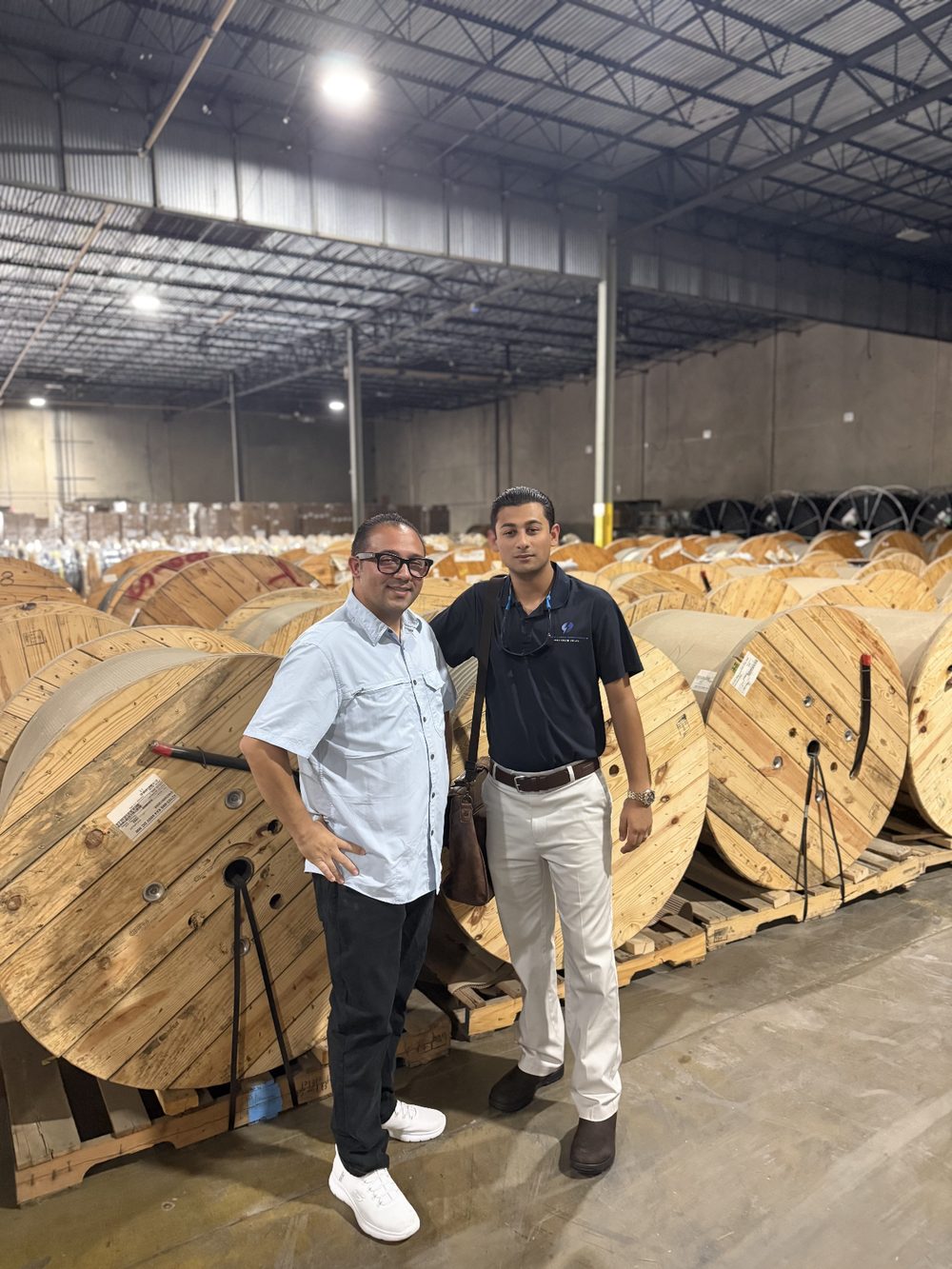
- Scope
- Electrical wire and cable only
- Metals
- Copper and aluminium
- Sizes
- #14 through 1000 MCM
- Voltage
- 600 V to 69 kV and above
- Coverage
- Statewide Oklahoma
How a request is judged
Four questions decide almost every load.
1. Is it identifiable?
Type, size, voltage class and conductor metal. A label photo or legible jacket print answers this.
2. Is it wire?
If it is equipment, a breaker, a transformer or general scrap, it is outside our scope.
3. How much is left?
Full reel, partial reel, coil or cut length — with a rough footage or weight figure.
4. How does it move?
Dock, forklift, palletised or hand load. This decides the truck and the timeline.