- Home
- Who sells to us
- Distributors and wholesalers
Surplus wire from distributors and wholesalers
Distributor surplus is different from contractor surplus: it is inventory, not leftovers. It comes with part numbers, quantities and a reason it did not move — a discontinued colour, a spec change, a customer who went another way.
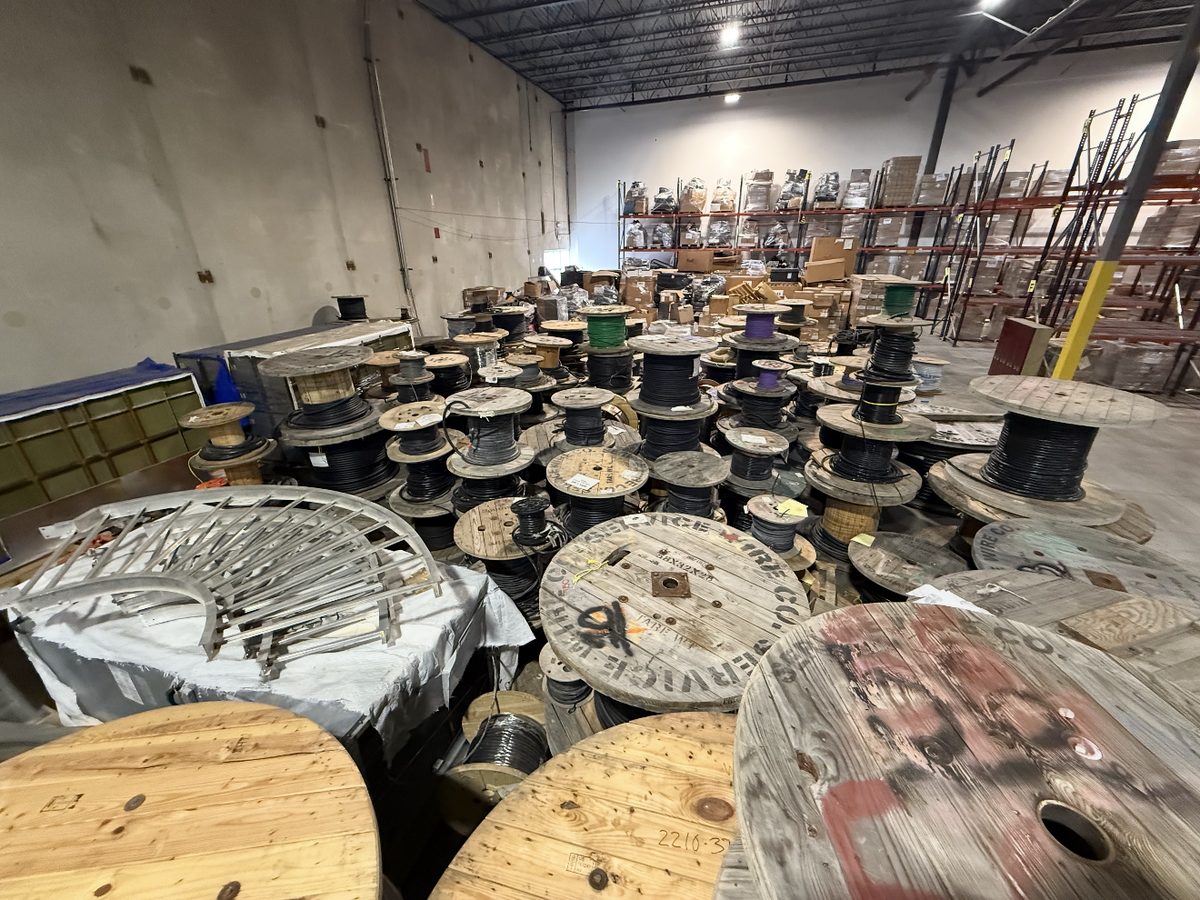
We buy that inventory in copper and aluminium, from single spools to pallet quantities, including opened reels and boxed stock. Where the original carton and label exist, quoting is straightforward; where they do not, the jacket print still identifies the product.
Because distributors handle many lines, mixed loads are the norm. Grouping by wire type and gauge makes the review faster and the pickup safer, but we will work with whatever form the list is in.
Wire that shows up here
- Discontinued colours and part numbers
- Opened spools and partial reels
- Slow-moving THHN, XHHW and SER
- Boxed building wire
- Tray and control cable overstock
- Medium voltage cable from a cancelled order
What usually triggers a disposal
- A manufacturer discontinued a colour or construction
- A spec change left a stock quantity stranded
- A customer cancelled after material was received
- A branch is consolidating slow-moving inventory
- An acquisition left duplicate stock
Send it once, properly
Reel labels, a count by type, and your loading situation. That is enough for a buyer to respond with something useful.
Distributors and wholesalers: what sellers ask
Do you buy opened spools?
Yes, provided the wire is identifiable and the remaining quantity is roughly known. Opened stock is normal in distribution and we quote it routinely.
Can you work from an inventory list instead of photos?
A list with type, size, quantity and condition is useful, and photos of a few representative labels fill in the rest. Both together give the fastest answer.
Other sellers we buy from
A contractor's surplus is a by-product of winning work. Every job leaves something behind: a partial reel of THHN, a coil of MC, a service cable cut short, or the entire wire package for a project that was cancelled after the gear was ordered.
Large facilities buy wire in advance and store it. When a line changes, a building is renovated or a campus standard is updated, that stock becomes surplus — often without anyone deciding to dispose of it.
Oklahoma's energy sector is the state's most reliable source of heavy surplus cable. Turnarounds, wellsite upgrades, compressor station work and unit replacements all release cable in quantities that are worth a formal conversation.