- Home
- Who sells to us
- Construction and demolition
Wire from construction and demolition work
Construction surplus arrives in two forms. The first is material bought for work that changed. The second is cable removed from a building before demolition — and those two are valued very differently.
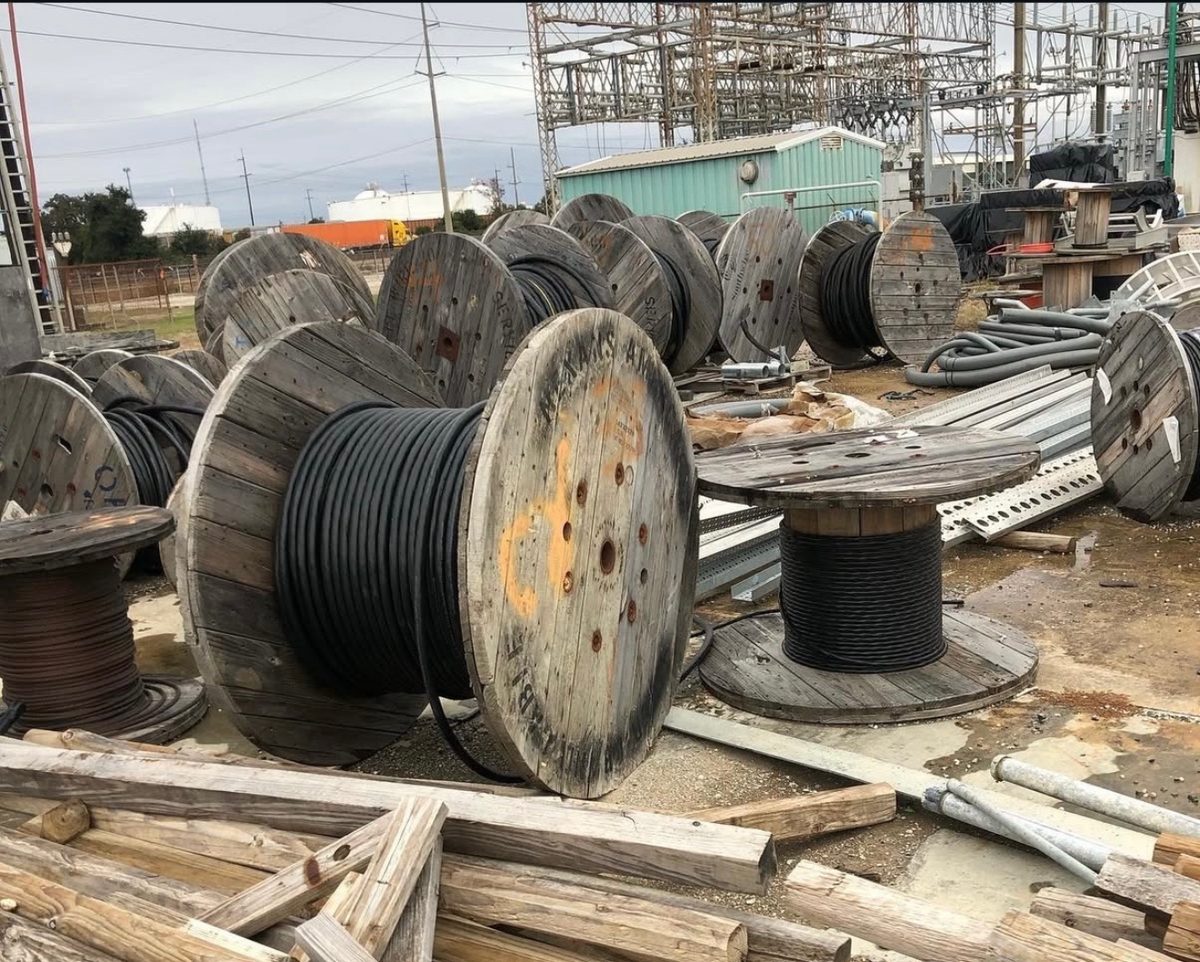
Scope-change leftovers are straightforward: full reels, partial reels and boxes that were never installed, usually with labels intact. Removed cable is a condition question. Service entrance cable, feeder and tray cable that came out cleanly and was coiled properly can still be usable; cable cut into short pieces or pulled through debris usually cannot.
We will tell you which side of that line your load falls on, and we will not ask you to ship material we cannot use. If the wire is mixed with demolition debris, separate what you can and photograph it as it sits.
Wire that shows up here
- SER, SEU and service entrance cable
- Feeder and XHHW
- MC and AC cable
- Tray cable
- Bare copper grounding
- URD and exterior cable
What usually triggers a disposal
- A change order reduced the wire package
- A building was stripped before demolition
- A remodel replaced service entrance cable
- A project closed with material returned to the shop
- A salvage contractor separated wire from a teardown
Send it once, properly
Reel labels, a count by type, and your loading situation. That is enough for a buyer to respond with something useful.
Construction and demolition: what sellers ask
Do you buy wire from a demolition site?
Sometimes. It depends on condition and how the cable was removed. Short cut pieces mixed with debris are usually not viable, while coiled service cable and intact reels can be.
What if the wire is mixed with other materials?
Separate the wire and cable as far as practical, then photograph it. We only buy wire, so equipment and general debris need to be handled separately.
Other sellers we buy from
A contractor's surplus is a by-product of winning work. Every job leaves something behind: a partial reel of THHN, a coil of MC, a service cable cut short, or the entire wire package for a project that was cancelled after the gear was ordered.
Large facilities buy wire in advance and store it. When a line changes, a building is renovated or a campus standard is updated, that stock becomes surplus — often without anyone deciding to dispose of it.
Distributor surplus is different from contractor surplus: it is inventory, not leftovers. It comes with part numbers, quantities and a reason it did not move — a discontinued colour, a spec change, a customer who went another way.